- Trip Overview
- Similar Tours
What's included
- Professionally guided tour
- Visa arrangements
Ionic Kilimanjaro Snow Cap: A Vanishing Crown of Africa

Mount Kilimanjaro, the highest peak in Africa at 5,895 meters (19,341 feet), is world-renowned not only for its breathtaking beauty and towering presence but also for its majestic snow-capped summit. This shimmering crown of ice and snow is one of the mountain’s most iconic features—visible from miles away and featured in countless photos, documentaries, and works of literature, including Hemingway’s famous story “The Snows of Kilimanjaro.” But what makes Kilimanjaro’s snow cap so special, and why is it disappearing?
Book this Tour with Kilinge Adventures
Apart from this, you may read and write some reviews for us from Safari Bookings.
Where Does the Snow Come From?
Despite being located just about 330 kilometers (205 miles) south of the equator, Kilimanjaro’s snow cap forms due to its extreme elevation. The mountain’s summit lies in what is called the alpine arctic zone, where temperatures regularly fall below freezing. The snow primarily accumulates during the rainy seasons (March–May and October–December) when moist air rises up the slopes, cools, and condenses into snowfall near the top.
The glaciers and ice fields that make up the snow cap are relics from the last Ice Age, which ended over 11,000 years ago. Today, only a fraction of that glacial mass remains.
The Glaciers of Kilimanjaro
There are three main glacier fields on Kilimanjaro:
- Northern Icefield
- Eastern Icefield
- Southern Icefield
Scattered around these are several smaller glaciers, including the famous Furtwängler Glacier, named after Walter Furtwängler, a German climber who summited Kilimanjaro in 1912.
These glaciers are not only beautiful but scientifically valuable. They contain climate records going back thousands of years, offering insights into historical weather patterns in East Africa.
Why Is the Snow Cap Shrinking?
In the early 20th century, Kilimanjaro’s summit was covered by over 12 square kilometers of ice. Today, more than 85% of that has vanished. Scientists estimate that at the current rate, the remaining glaciers may disappear entirely within the next few decades.
Several factors contribute to the snow cap’s retreat:
- Rising temperatures: Global climate change has led to increased warming, even at high elevations.
- Decreased precipitation: Less snowfall and more sublimation (where ice turns directly into vapor without melting) has led to glacier thinning.
- Deforestation: Loss of forests at the mountain’s base reduces the amount of moisture that reaches the summit, further limiting snow accumulation.
Why the Snow Cap Still Matters
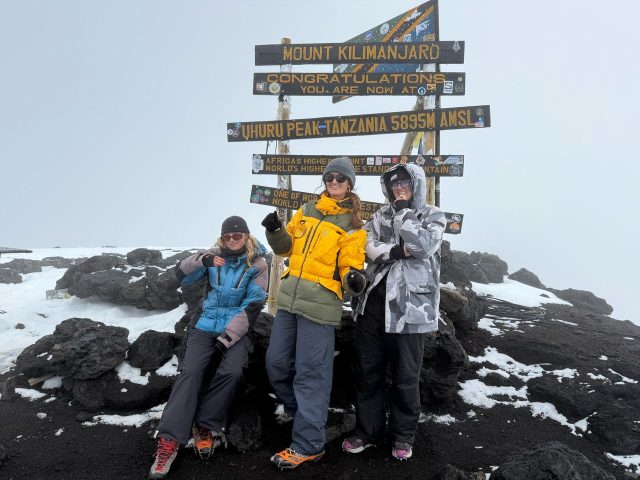
For locals and visitors alike, Kilimanjaro’s snowy peak is more than a geographical feature—it’s a cultural and spiritual symbol. The mountain is revered in local Chagga traditions and plays a central role in Tanzanian tourism. Seeing snow on Kilimanjaro is a powerful and surreal experience, especially for climbers who make the midnight ascent to Uhuru Peak.
Its disappearance would not only be a visual loss but also a warning sign of broader environmental shifts in the region and across the globe.
Can You Still See Snow on Kilimanjaro Today?
Yes! Climbers who reach the summit—particularly during or after the rainy seasons—can still witness the awe-inspiring glaciers and snow patches surrounding the crater. The best chances to see snow are:
- January to March
- June to October (drier but colder)
- After short rains in November and early December
While the snow cap may be smaller, the experience of walking past ancient glaciers and seeing the sunrise over Africa’s highest point remains unforgettable.
Final Thoughts
Mount Kilimanjaro’s snow cap is more than just an Instagram-worthy backdrop—it’s a powerful symbol of natural wonder, climate change, and the beauty of our planet’s extremes. As it slowly vanishes, every moment spent near these icy relics becomes more precious. Whether you’re an adventurer, scientist, or nature lover, witnessing the snows of Kilimanjaro is a once-in-a-lifetime experience that connects you deeply to both the mountain and the Earth’s fragile ecosystems.