Best Kilimanjaro acclimatization Join with Friends
- Trip Overview
- Trip Itinerary
What's included
Marangu Route 4 days forest zone trek
The Marangu Route 4 days forest zone trek offers an immersive journey through Mount Kilimanjaro’s rainforest ecosystem, making it ideal for travelers who value nature, biodiversity, and scenic hiking. As the only Kilimanjaro route with permanent hut accommodation, Marangu allows trekkers to move comfortably through the forest without camping equipment, keeping the focus on exploration and wildlife observation.
The 4-Day Marangu Route Forest Zone Trek offers an immersive introduction to the natural environment of Mount Kilimanjaro, beginning in the lush forest-covered lower slopes of Tanzania’s highest mountain. The forest section is one of the most beautiful and biologically rich parts of the Marangu Route, providing a striking contrast to the dry, rocky landscapes encountered at higher elevations.
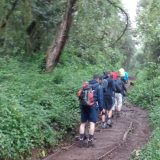
The journey begins at Marangu Gate and initially passes through cultivated areas before entering the montane rainforest. As the trail climbs, the atmosphere changes from warm and humid to cool and shaded, with dense vegetation surrounding the trail.
Although the forest is most prominent during the first part of the trek, the 4-day journey allows travelers to experience how the mountain’s environment changes progressively from rainforest to moorland, alpine desert, and eventually the summit zone.
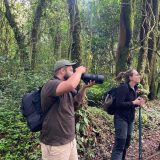
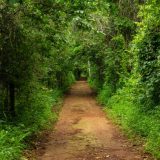
The forest zone provides a completely different experience from the exposed upper slopes of Kilimanjaro. Tall trees create a natural canopy over sections of the trail, while moss, ferns, vines, and other plants cover the forest floor.
The soundscape is equally distinctive. Instead of the strong winds and open landscapes found higher on the mountain, the forest is filled with bird calls, rustling leaves, insects, and the occasional sounds of monkeys moving through the vegetation.
Walking slowly through this environment allows trekkers to appreciate the ecological diversity of Kilimanjaro rather than simply treating the forest as the first stage of the climb.
Forest Landscape and Vegetation
The lower Marangu Route is characterized by a humid mountain-forest environment. Vegetation can include:
-
Tall native trees
-
Ferns
-
Mosses
-
Climbers and vines
-
Forest shrubs
-
Wildflowers
-
Various highland plants
The dense vegetation creates shaded sections along the trail, although openings in the forest can provide glimpses of the surrounding slopes and lower valleys.
As elevation increases, the forest gradually becomes less dense. This natural transition is one of the most interesting aspects of the Marangu Route because trekkers can observe the relationship between elevation, temperature, rainfall, and vegetation.
Wildlife Experience
Kilimanjaro’s forest zone provides opportunities to observe wildlife, although sightings cannot be guaranteed.
Depending on location and conditions, visitors may encounter black-and-white colobus monkeys, blue monkeys, birds, butterflies, and other small forest species.
Birdwatchers may find the forest particularly interesting because the dense vegetation supports a variety of birdlife. Guides can help identify species and explain the ecological importance of the forest.
Visitors should observe animals from a respectful distance and avoid feeding or disturbing wildlife.
Forest Climate
The forest is generally warmer and more humid than the higher parts of Kilimanjaro. Rain and mist are possible, particularly during the wetter seasons.
Trekkers should be prepared for:
-
Humid conditions
-
Rain showers
-
Mist and cloud
-
Wet vegetation
-
Muddy sections after rainfall
-
Cooler temperatures as elevation increases
A waterproof jacket and good-quality hiking boots are especially useful in this environment.
Nature Photography
The forest section provides excellent opportunities for nature photography. The combination of dense greenery, filtered sunlight, mountain vegetation, wildlife, and changing weather can create distinctive images.
Good subjects include:
-
Forest canopy
-
Ferns and moss-covered trees
-
Monkeys
-
Birds
-
Forest flowers
-
Mountain trails
-
Mist between the trees
-
Sunlight filtering through the canopy
Because the forest can be damp, cameras and other electronic equipment should be protected from moisture.
Why experience forest zone trek
The forest is more than simply the starting section of the Marangu Route. It provides the foundation for understanding Kilimanjaro’s ecological diversity.
The forest experience allows trekkers to:
-
Explore one of Kilimanjaro’s most biodiverse environments.
-
Observe how vegetation changes with altitude.
-
Look for monkeys and forest birds.
-
Experience the cool, shaded mountain environment.
-
Photograph unique plants and landscapes.
-
Learn about the relationship between Kilimanjaro’s ecosystems and local communities.
-
Appreciate the dramatic transition from rainforest to high-altitude terrain.
What to Wear in the Forest Zone
Conditions can be humid and wet, so suitable clothing is important. Lightweight moisture-wicking clothing, comfortable hiking trousers, waterproof hiking boots, and a rain jacket are recommended.
Because temperatures become cooler as the trail climbs, it is useful to dress in layers. A fleece or warm mid-layer can be added later in the day, while waterproof outerwear protects against rain.
Best Time for a Forest Trek
The Marangu forest can be explored throughout the year, but conditions vary seasonally. The drier periods generally offer more comfortable trekking conditions, while the rainy seasons can produce wetter trails, mist, and lush vegetation.
The main rainy periods are generally March–May and October–November, while relatively drier conditions are commonly experienced during June–September and December–early March.
Book this Tour with Kilinge Adventures
Apart from this, you may read and write some reviews for us from Safari Bookings.
Also, you may read and write reviews for us from TripAdvisor
- Day 1
- Day 2
- Day 3
- Day 4
Marangu Gate – Mandara Hut
The first day focuses heavily on the montane rainforest. After registration at Marangu Gate, the trek enters the forest and follows a gradually ascending trail toward Mandara Hut.
This is an excellent opportunity to observe the mountain's lower ecosystem, with dense vegetation and the possibility of wildlife encounters. The atmosphere is
generally cool and shaded beneath the forest canopy.Distance: Approximately 8 km Trekking time:
3–4 hours Elevation: Approximately 1,860 m to 2,700 m Environment: Montane rainforest Overnight: Mandara HutMandara Hut – Horombo Hut
The second day demonstrates the mountain's transition from forest to heath and moorland. The dense trees gradually disappear and are replaced by more open vegetation.
The scenery becomes broader, with views
toward Mawenzi and Kibo possible in clear weather. This transition is an important part of the ecological experience because it shows how the mountain environment changes with altitude.Distance: Approximately 11 km Trekking time: 5–7 hours Elevation: Approximately 2,700 m to 3,720 m Environment: Heath and moorland Overnight: Hor
ombo HutHorombo Hut – Kibo Hut
The landscape changes dramatically as the trek continues toward Kibo. The trail crosses the Saddle, a broad area between Mawenzi and Kibo,
and enters the alpine desert.The forest is now far below, replaced by dry, rocky terrain with very little vegetation. The contrast between the first day's rainforest and this barren landscape highlights Kilimanjaro's extraordinary range of ecological environments.
Distance: Approximately 9–10
km Trekking time: 5–7 hours Elevation: Approximately 3,720 m to 4,700 m Environment: Alpine desert Overnight: Kibo HutKibo Hut – Uhuru Peak – Descent
The final day begins during the night with the ascent toward Uhuru Peak at 5,895 m. The environment is now cold, rocky, and exposed, representing a
dramatic contrast to the forest experienced at the beginning of the journey.The summit section provides a final perspective on the enormous ecological journey from tropical forest to
the high-altitude summit. After reaching Uhuru Peak, trekkers begin the long descent toward the lower mountain.Summit: Uhuru Peak – 5,895 m Summit ascent: Approximately 6–8 hours
Environment: Alpine desert and summit zone Descent: Several additional hours