Best Kilimanjaro acclimatization Join with Friends
- Trip Overview
- Trip Itinerary
What's included
- All meals included
- All mentioned activities
- Lunch box
- Medically qualified mountain guides, cooks and porters
- Oxygen Cylinder
- Professionally guided tour
- Alcoholic and soft drinks
- Entry visa for Tanzania
- Laundry Services
- Other International flights
- Personal expenses
- Services not specifically stated in the itinerary
- Tips to mountain crew
- Visa arrangements
Is 6 Days Rongai Route Enough for Kilimanjaro? Complete Climbing Guide 2026/2027
Overview
Is 6 days Rongai Route enough for Kilimanjaro? Yes, six days can be enough to reach Uhuru Peak, the highest point of Mount Kilimanjaro at 5,895 meters above sea level. However, completing the climb within this timeframe requires good physical preparation, careful altitude management, favorable weather conditions, and guidance from experienced mountain professionals.
The 6 Days Rongai Route is one of the shorter trekking options for climbers who want to approach Kilimanjaro from its quieter northern slopes near the Kenyan border. This route is recognized for its gradual initial ascent, beautiful wilderness, impressive views of Mawenzi Peak, and relatively uncrowded hiking trails.
Although the six-day itinerary provides sufficient time to complete the planned trekking distance, it offers limited opportunities for acclimatization compared with longer climbing programs. As trekkers move higher, reduced oxygen availability increases the risk of altitude sickness, making preparation and responsible pacing essential.
At Kilinge Adventures, we help travelers understand what to expect from a six-day Kilimanjaro adventure, including daily hiking distances, altitude changes, summit challenges, and whether this itinerary is suitable for their experience level.
Is 6 Days Really Enough to Climb Kilimanjaro?
Six days is a feasible duration for climbing Kilimanjaro through the Rongai Route, but being able to complete the route and being adequately acclimatized are two different considerations.
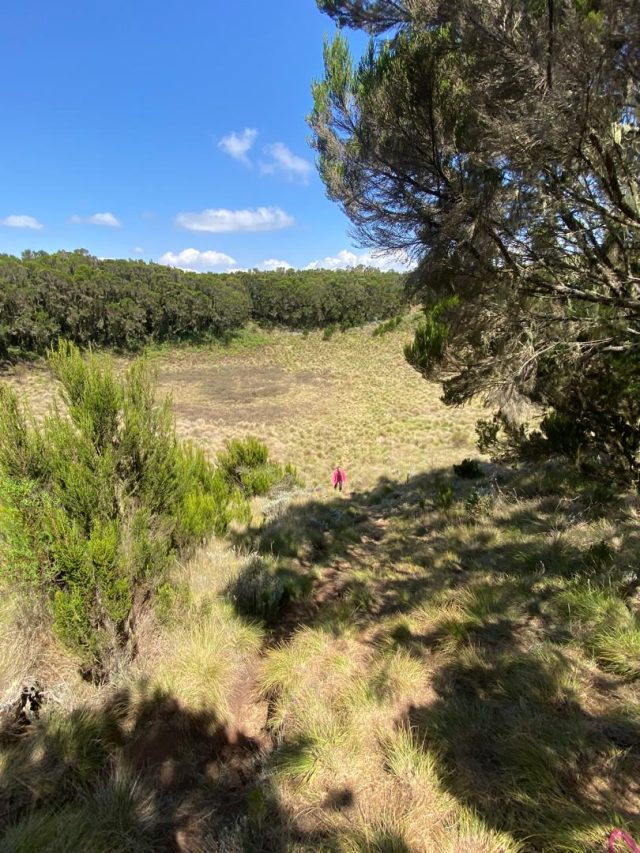
The itinerary normally includes four days of ascent to the high camp, one demanding summit day, and one final descent day. This schedule gives trekkers the opportunity to experience several ecological zones before attempting the summit.
However, the body needs time to adapt to the reduced oxygen pressure at high altitude. Six days provides a relatively short acclimatization period, particularly for climbers arriving from low elevations.
For experienced hikers who are physically prepared and understand the demands of altitude, six days may be a reasonable option. First-time high-altitude trekkers should seriously consider adding an extra day.
6 Days Rongai Route Kilimanjaro Tour Facts
| Tour Information | Details |
|---|---|
| Tour Name | 6 Days Rongai Route Kilimanjaro Climb |
| Mountain | Mount Kilimanjaro, Tanzania |
| Duration | 6 Days / 5 Nights |
| Starting Point | Rongai Gate / Nalemoru area |
| Finishing Point | Marangu Gate |
| Highest Elevation | Uhuru Peak – 5,895m |
| Route Approach | Northern side of Kilimanjaro |
| Difficulty | Moderate to challenging, with a strenuous summit |
| Accommodation | Mountain camping |
| Main Attraction | Mawenzi Peak and northern wilderness |
| Best Climbing Seasons | January–February and June–October |
| Recommended Experience | Good hiking fitness and altitude awareness |
| Tour Operator | Kilinge Adventures |
Why Choose the 6 Days Rongai Route?
The Rongai Route provides a distinctive Kilimanjaro experience compared with routes approaching from the southern side. Its northern location, quieter trails, and scenic landscapes make it appealing to travelers seeking an adventurous but less crowded mountain journey.
Key Highlights
-
Peaceful northern trails: Experience less crowded hiking paths during much of the ascent.
-
Gradual early elevation gain: The initial sections are generally less steep than some other Kilimanjaro approaches.
-
Beautiful mountain scenery: Enjoy spectacular views of Mawenzi, Kibo, and the expansive alpine saddle.
-
Different ecological zones: Trek through forest, moorland, alpine desert, and the summit zone.
-
Unique summit approach: Ascend toward Gilman’s Point before continuing along the crater rim to Uhuru Peak.
-
Rainforest descent: Finish through the Marangu Route, experiencing different scenery from the ascent.
- Six-day adventure: Suitable for travelers with limited time who are appropriately prepared and accept the acclimatization limitations.
Is 6 Days Enough for Kilimanjaro Acclimatization?
Acclimatization is the body’s adjustment to lower oxygen availability at higher elevations. It plays an essential role in reducing the risk of altitude illness.
The six-day Rongai Route includes relatively rapid gains in sleeping altitude during the middle stages. Although the trail begins gradually, the schedule becomes demanding as trekkers approach Mawenzi Tarn and Kibo.
Acclimatization Factor Six-Day Rongai Route Total duration 6 days Nights before summit attempt 4 Dedicated acclimatization day None Initial ascent Relatively gradual Sleeping altitude gains Substantial on several days Altitude sickness risk Significant Extra acclimatization day Strongly recommended Overall assessment Feasible but limited acclimatization Note: Above approximately 3,000 meters, conservative altitude guidance generally recommends limiting increases in sleeping elevation to about 500 meters per day, with additional acclimatization days during continued ascent. The six-day Rongai schedule exceeds this guideline on several days.
Physical fitness does not prevent altitude sickness. Trekkers should never ascend to sleep higher when experiencing symptoms of acute mountain sickness, and serious symptoms require urgent descent and medical attention.
6 Days vs 7 Days Rongai Route.
Which Is Better?
One of the most common questions among Kilimanjaro travelers is whether adding an extra day makes a meaningful difference.
Both itineraries can reach Uhuru Peak, but a seven-day Rongai itinerary can include an additional acclimatization day, commonly around Mawenzi Tarn, depending on the specific route plan.
Comparison 6 Days Rongai 7 Days Rongai Duration 6 days 7 days Summit Elevation 5,895m 5,895m Trekking Difficulty Challenging Challenging Acclimatization Time Limited More time available Extra Rest Day No Can be included Itinerary Pace Faster More flexible Cost Generally lower Generally higher Recommended For Well-prepared trekkers accepting greater altitude risk Climbers seeking additional acclimatization time Which Option Do We Recommend?
For travelers with limited holiday time and previous experience trekking at altitude, the six-day itinerary may be considered after evaluating its risks.
For first-time Kilimanjaro climbers, travelers arriving directly from sea level, and those who prioritize acclimatization, the seven-day Rongai Route is generally the better choice.
An additional day improves the opportunity to adapt but does not eliminate altitude-related risks or guarantee summit success.
How Difficult Is the 6 Days Rongai Route?
The Rongai Route is sometimes described as one of Kilimanjaro’s easier approaches because its early stages are comparatively gradual.
However, this description can be misleading. Climbing to nearly 5,900 meters within six days remains a serious physical challenge.
The most demanding elements include long hiking days, rapid altitude gain, freezing summit temperatures, steep volcanic terrain, and the extended descent after reaching the summit.
Main Challenges
-
High altitude: Reduced oxygen availability can affect even physically fit climbers.
-
Long summit day: The ascent and descent may take 12–16 hours.
-
Cold temperatures: Summit temperatures can fall well below freezing.
-
Limited acclimatization: The six-day schedule allows relatively little time to adapt.
-
Physical fatigue: Consecutive trekking days require endurance and recovery.
-
Variable weather: Rain, wind, snow, and poor visibility can increase difficulty.
Trekkers should prepare through regular hiking, cardiovascular exercise, strength training, and practice carrying a daypack.
Can Beginners Climb Kilimanjaro in 6 Days via Rongai?
Beginners can attempt Kilimanjaro through the Rongai Route, but six days is not the ideal choice for every first-time climber.
The route does not normally require technical mountaineering skills. Nevertheless, participants need sufficient physical endurance, appropriate equipment, and an understanding of high-altitude risks.
A beginner who is physically active and has previous multi-day hiking experience may be better prepared than someone who has never completed a demanding trek.
However, good fitness does not guarantee successful acclimatization.
For first-time high-altitude trekkers, we generally recommend considering a longer itinerary with additional time to adapt.
What Is the Summit Success Rate for the 6 Days Rongai Route?
Summit success is an important consideration, but travelers should be cautious about websites advertising extremely high percentages without explaining their data sources.
There is no universally verified success rate for all six-day Rongai Route climbs.
The outcome depends on the climber’s response to altitude, itinerary design, weather conditions, physical preparation, and the decisions made by the mountain guiding team.
Factor Influence on Summit Attempt Acclimatization More gradual ascent can improve altitude adaptation Physical preparation Helps with endurance and recovery Weather Severe conditions can prevent safe progress Guide experience Supports pacing, monitoring and safety decisions Trekking duration Longer itineraries provide more acclimatization opportunities Personal health Affects individual suitability and response to altitude Best Time to Climb the 6 Days Rongai Route
Rongai approaches Kilimanjaro from the northern side, which is generally drier than the southern slopes.
This makes the route attractive during some wetter periods, although rain, cloud, strong wind, and cold temperatures are still possible.
Travel Period General Conditions Recommendation January–February Often relatively dry with favorable climbing windows Excellent period to consider March–May Long rainy season; conditions can be wet Less favorable June–October Generally drier, with cold high-altitude conditions Excellent period to consider November–December Short rains and variable weather Possible with flexibility Best overall time: January to February and June to October are commonly preferred for Kilimanjaro climbing. Regardless of season, summit weather can change quickly.
Essential Packing List for a 6 Days Rongai Route Climb
Appropriate mountain equipment is necessary for comfort and safety throughout the six-day adventure.
Essential Equipment Why It Is Important Waterproof hiking boots Provide support and traction Thermal base layers Help retain body warmth Insulated jacket Protects against summit-night cold Waterproof jacket and trousers Protect against rain, snow and wind Warm gloves and hat Protect exposed areas from cold Trekking poles Improve stability on steep terrain Headlamp Essential for the nighttime summit attempt Cold-weather sleeping bag Provides warmth during mountain camping Water containers Support adequate hydration Sunglasses and sunscreen Protect against strong ultraviolet exposure Personal first-aid and medications Support individual medical needs All trekkers should check their equipment before departure and confirm which items are included in their climbing package.
Why Book Your 6 Days Rongai Route with Kilinge Adventures?
Planning a Kilimanjaro climb involves more than selecting a trekking route. Travelers also need reliable logistical arrangements, appropriate mountain equipment, qualified guides, and realistic expectations about altitude and physical difficulty.
Kilinge Adventures helps travelers plan Kilimanjaro trekking experiences suited to their available time, preferred route, and adventure goals.
Our team can assist you in comparing the six-day and seven-day Rongai itineraries so that you understand the differences before making a booking decision.
What to Expect When Planning Your Climb
-
Guidance on selecting a suitable Kilimanjaro itinerary.
-
Information about daily trekking distances and mountain conditions.
-
Assistance with camping and mountain logistics.
-
Advice on clothing, equipment, and physical preparation.
-
Private and group climbing options, subject to availability.
-
Support with travel arrangements in Tanzania.
-
Clear information about itinerary limitations and summit-day challenges.
The exact package inclusions, guide qualifications, emergency procedures, and safety equipment should be confirmed before booking.
Frequently Asked Questions
Is six days enough to reach Uhuru Peak?
Yes. The six-day Rongai itinerary includes a summit attempt at Uhuru Peak, 5,895 meters above sea level. However, reaching the summit is not guaranteed, and the short schedule provides limited acclimatization.
Is the six-day Rongai Route suitable for beginners?
It may be possible for well-prepared beginners, but the altitude and demanding summit day make it challenging. A seven-day itinerary is generally preferable for first-time high-altitude climbers.
Is the Rongai Route easier than Machame?
Rongai has a relatively gradual beginning and avoids the Barranco Wall. Machame involves more varied and sometimes steeper terrain. Both routes remain demanding because of altitude.
How many nights do climbers spend on the mountain?
The six-day Rongai itinerary includes five nights on the mountain, generally in designated camping areas.
Do I need technical climbing experience?
Technical rock climbing is not normally required on the standard Rongai trekking route. However, strong hiking fitness, appropriate equipment, and careful altitude management are essential.
Can I climb Kilimanjaro without previous hiking experience?
It is possible, but previous hiking experience is strongly recommended. Training on hills and completing long walks before departure can improve physical readiness.
What happens if I experience altitude sickness?
Inform your guide immediately. Do not continue ascending with symptoms of acute mountain sickness. Severe or worsening symptoms require prompt descent and medical assessment. Guides should have a clear emergency response plan.
Is seven days better than six days for Rongai?
Generally, yes. Seven days allows additional time for acclimatization when the itinerary is appropriately designed, making it preferable for many climbers.
Finally, Is 6 Days Rongai Route Enough for Kilimanjaro?
Six days can be enough to complete the Rongai Route and attempt the summit of Mount Kilimanjaro, but it is not the most suitable duration for every climber.
The itinerary offers a beautiful northern approach, quieter trails, impressive views of Mawenzi Peak, and an opportunity to reach Africa’s highest summit within a relatively short period.
However, the limited acclimatization time is a significant consideration. For travelers who can extend their adventure, a seven-day Rongai itinerary generally offers a better opportunity to adjust to altitude.
The most important decision is not simply how quickly you can reach the summit, but how responsibly you can plan your ascent.
Book Your Rongai Route Kilimanjaro Adventure 2026/2027
Are you planning to climb Mount Kilimanjaro and wondering whether six days will be enough?
Kilinge Adventures can help you explore the six-day and seven-day Rongai Route options, understand the daily trekking requirements, and choose a climbing itinerary that matches your experience and travel schedule.
Contact our team to discuss available departures, private or group climbing arrangements, equipment requirements, and your preferred travel dates.
Plan your Kilimanjaro adventure with Kilinge Adventures and experience the remarkable beauty of Tanzania’s highest mountain.
-
Book this Tour with Kilinge Adventures
Apart from this, you may read and write some reviews for us from Safari Bookings.
- Day 1
- Day 2
- Day 3
- Day 4
- Day 5
- Day 6
Rongai Gate to Simba Camp
| Day 1 Trekking Details | Information |
|---|---|
| Starting Point | Rongai Gate (approx. 1,950m) |
| Destination | Simba Camp (approx. 2,625m) |
| Hiking Distance | Approx. 7 km |
| Hiking Duration | 3–4 hours |
| Vegetation Zone | Cultivated land and forest |
| Accommodation | Camping |
Simba Camp to Kikelewa Camp
| Day 2 Trekking Details | Information |
|---|---|
| Starting Point | Simba Camp (2,625m) |
| Destination | Kikelewa Camp (approx. 3,600m) |
| Hiking Distance | Approx. 12 km |
| Hiking Duration | 6–8 hours |
| Vegetation Zone | Moorland |
| Accommodation | Camping |
Kikelewa Camp to Mawenzi Tarn Camp
| Day 3 Trekking Details | Information |
|---|---|
| Starting Point | Kikelewa Camp (3,600m) |
| Destination | Mawenzi Tarn Camp (approx. 4,330m) |
| Hiking Distance | Approx. 5 km |
| Hiking Duration | 3–5 hours |
| Vegetation Zone | Alpine heath and moorland |
| Accommodation | Camping |
Mawenzi Tarn Camp to Kibo Hut
| Day 4 Trekking Details | Information |
|---|---|
| Starting Point | Mawenzi Tarn (4,330m) |
| Destination | Kibo Hut area (approx. 4,700m) |
| Hiking Distance | Approx. 8 km |
| Hiking Duration | 5–6 hours |
| Vegetation Zone | Alpine desert |
| Accommodation | Camping at the designated high camp |
Kibo Hut to Uhuru Peak – Summit Day and Descent to Horombo
| Day 5 Trekking Details | Information |
|---|---|
| Starting Point | Kibo Hut area (4,700m) |
| Summit Destination | Uhuru Peak (5,895m) |
| Overnight Destination | Horombo area (3,720m) |
| Hiking Distance | Approx. 21–22 km |
| Hiking Duration | 12–16 hours |
| Main Challenge | Extreme altitude, cold and exhaustion |
| Accommodation | Camping |
Horombo to Marangu Gate
| Day 6 Trekking Details | Information |
|---|---|
| Starting Point | Horombo area (3,720m) |
| Destination | Marangu Gate (approx. 1,860m) |
| Hiking Distance | Approx. 20 km |
| Hiking Duration | 5–7 hours |
| Vegetation Zone | Moorland and rainforest |
| End of Tour | Transfer to Moshi or Arusha |