Best Kilimanjaro acclimatization Join with Friends
- Trip Overview
- Trip Itinerary
What's included
- All meals included
- All mentioned activities
- All park entrances fees
- Lunch box
- Medically qualified mountain guides, cooks and porters
- Oxygen Cylinder
- Alcoholic and soft drinks
- Entry visa for Tanzania
- Laundry Services
- Other International flights
- Personal expenses
- Services not specifically stated in the itinerary
- Tips to mountain crew
6 Days Rongai Route Summit Day | Kilimanjaro Summit Guide
Overview
The 6 Days Rongai Route Summit Day is the most challenging and rewarding stage of the Rongai Route Kilimanjaro trek. After several days of trekking and acclimatization, climbers make their final push from Kibo Hut/Camp toward Uhuru Peak (5,895 m), the highest point on Mount Kilimanjaro and the African continent.
Summit day normally begins around midnight. Climbers ascend slowly through the cold, dark high-altitude environment toward Gilman’s Point (5,685 m) on the crater rim before continuing toward Uhuru Peak. Reaching the summit around the early morning hours can reward trekkers with spectacular views as daylight spreads across Kilimanjaro.
After celebrating at Uhuru Peak, the journey is far from finished. Climbers descend to Kibo for a short rest before continuing down toward Horombo, making this the longest and most physically demanding day of the six-day Rongai itinerary.
With Kilinge Adventures, climbers are supported by experienced mountain guides and crew throughout this crucial stage of the expedition.
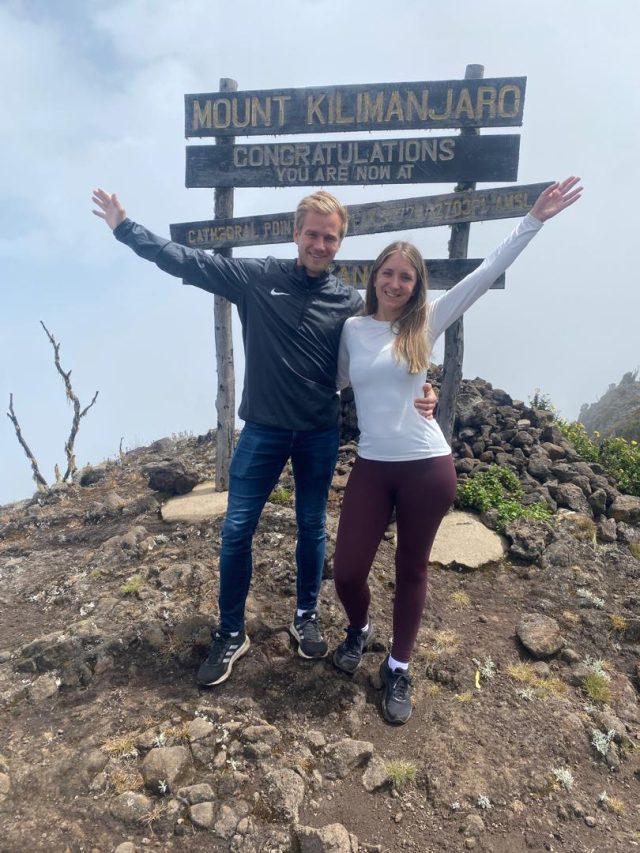
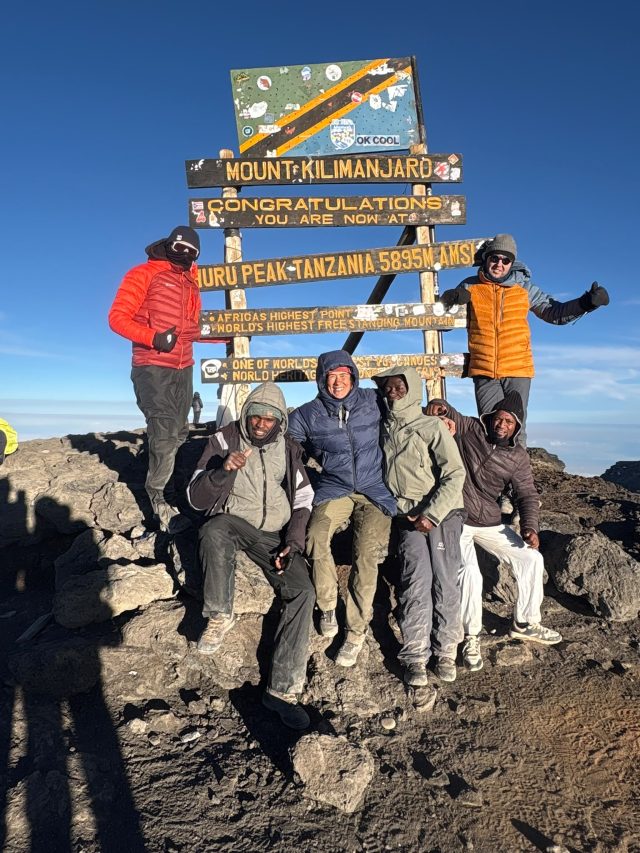
6 Days Rongai Route Summit Day Facts
| Summit Information | Details |
|---|---|
| Route | Rongai Route |
| Summit Day | Day 5 |
| Starting Point | Kibo Hut/Camp |
| Main Crater-Rim Point | Gilman’s Point – 5,685 m |
| Summit | Uhuru Peak – 5,895 m |
| Descent Destination | Horombo |
| Typical Start | Around midnight |
| Difficulty | Challenging |
| Main Challenge | High altitude, cold and long trekking hours |
| Highest Point | Uhuru Peak – 5,895 m |
| Descent Route | Marangu Route |
What Happens on the Rongai Route Summit Day?
The summit attempt generally begins late at night or around midnight after a short period of rest at Kibo. Climbers prepare their warm clothing, headlamps, water and essential equipment before setting out with their guides.
The pace is deliberately slow. At this altitude, conserving energy and maintaining a steady rhythm are more important than walking quickly.
The journey can be divided into three important sections:
Kibo → Gilman’s Point → Uhuru Peak → Kibo → Horombo
Each section presents a different physical and mental challenge.
Stage 1: Kibo to Gilman’s Point – The Tough Night Ascent
The first major objective is Gilman’s Point at approximately 5,685 metres.
Leaving Kibo in darkness, trekkers follow a steep trail toward the crater rim. Headlamps illuminate the path while temperatures can fall well below freezing.
This section is particularly demanding because climbers are dealing with reduced oxygen availability, cold temperatures, fatigue and a steep ascent.
Your guide will normally maintain a controlled “pole pole” pace—Swahili for “slowly, slowly.”
Reaching Gilman’s Point is a significant achievement and places climbers on Kilimanjaro’s crater rim.
Stage 2: Gilman’s Point to Uhuru Peak – The Final Push
From Gilman’s Point, climbers continue along the crater rim toward Uhuru Peak.
Although the remaining distance may appear manageable, the extreme altitude means that even relatively gentle sections can feel exhausting.
The surrounding landscape becomes increasingly dramatic, with expansive mountain views and the high-altitude environment creating one of the most memorable sections of the Rongai trek.
Eventually, you reach:
Uhuru Peak – 5,895 m
Uhuru Peak is the highest point on Mount Kilimanjaro and the highest point in Africa.
Weather, health and timing permitting, climbers usually spend a short period at the summit taking photographs and appreciating the achievement before beginning the descent.
Stage 3: Uhuru Peak to Kibo – Beginning the Descent
After reaching Uhuru Peak, climbers retrace part of the summit trail toward Kibo.
Descending can be faster than ascending, but trekkers must remain careful because they are already tired after many hours at altitude.
Once back at Kibo, there is normally an opportunity for a short rest, food and hydration before continuing farther down the mountain.
Stage 4: Kibo to Horombo – The Long Descent
The day’s journey continues from Kibo toward Horombo.
As altitude decreases, breathing generally becomes easier and temperatures become warmer. However, the legs can be tired after the summit attempt, making the descent another test of endurance.
Reaching Horombo marks the end of an exceptionally long but rewarding trekking day.
After dinner, climbers can finally enjoy a much-needed night’s rest before completing their final descent to Marangu Gate the following day.
How Difficult Is the 6 Days Rongai Route Summit Day?
The 6 Days Rongai Route summit day is challenging, primarily because of altitude rather than technical climbing.
Several factors contribute to the difficulty:
| Challenge | What to Expect |
|---|---|
| High altitude | Less available oxygen makes physical activity considerably harder |
| Cold temperatures | Summit conditions can be extremely cold, particularly before sunrise |
| Night trekking | Much of the initial ascent takes place in darkness |
| Steep terrain | The approach toward the crater rim requires sustained uphill effort |
| Long duration | Summit and descent together create a very long trekking day |
| Fatigue | Climbers begin after already spending several days trekking |
| Mental challenge | Patience and determination are important during the slow ascent |
The Rongai Route does not normally require technical mountaineering skills, but that should not be confused with being easy. Altitude sickness is a genuine risk on Kilimanjaro, and guides may recommend stopping or descending when safety requires it.
What Makes Summit Day Special?
Summit day is more than simply reaching the highest point.
It combines the physical challenge of high-altitude trekking with some of Kilimanjaro’s most memorable experiences: walking beneath a clear night sky, watching the horizon gradually brighten, reaching the crater rim and finally standing at Uhuru Peak.
For many climbers, it is the moment when several days of preparation, trekking and determination come together.
Summit-Day Timeline
| Stage | Typical Experience |
|---|---|
| Late evening | Rest and final preparation at Kibo |
| Around midnight | Begin summit ascent |
| Early morning | Approach Gilman’s Point |
| Morning | Continue toward Uhuru Peak |
| After summit | Begin descent toward Kibo |
| Later in the day | Continue descending toward Horombo |
| Evening | Dinner and overnight rest |
Times are approximate because actual progress depends on the climber, weather, trail conditions and guide decisions.
What Should You Wear on Summit Day?
Clothing becomes especially important because summit temperatures can be severe.
A good layering system generally includes:
- Thermal base layers
- Warm fleece or insulating mid-layer
- Insulated/down jacket
- Waterproof and windproof outer jacket
- Thermal leggings
- Trekking trousers
- Waterproof outer trousers
- Warm trekking socks
- Insulated gloves
- Warm hat or beanie
- Neck gaiter or buff
- Sturdy trekking boots
- Headlamp with spare batteries
- Sunglasses for daylight descent
Why Choose Kilinge Adventures for Your Rongai Summit?
A successful Kilimanjaro experience requires more than reaching the mountain gate. Proper organization, experienced mountain personnel, suitable equipment, meals, pacing and safety procedures all contribute to the trekking experience.
With Kilinge Adventures, your 6 Days Rongai Route Kilimanjaro trek is organized from the initial mountain preparation through summit day and the final descent.
Whether you are a solo traveler, couple, group of friends or private group, the objective is to provide professional support throughout your Kilimanjaro journey.
Frequently Asked Questions
What day is summit day on the 6 Days Rongai Route?
The summit attempt normally takes place on Day 5, beginning around midnight from the Kibo area.
Where does Rongai summit day start?
The summit push starts from Kibo Hut/Camp.
What is the highest point?
The ultimate objective is Uhuru Peak at 5,895 metres, the highest point on Mount Kilimanjaro.
Do you reach Gilman’s Point before Uhuru Peak?
Yes. Climbers approaching from Kibo normally reach Gilman’s Point on the crater rim before continuing toward Uhuru Peak.
Is Rongai summit day difficult?
Yes. It is generally the most difficult day of the trek because of the high altitude, cold temperatures, steep ascent, limited sleep and long trekking duration.
Do I need technical climbing experience?
The standard Rongai trekking route generally does not require technical mountaineering skills. However, climbers should have suitable physical preparation and proper high-altitude trekking equipment.
What happens after reaching Uhuru Peak?
After a brief period at the summit, climbers descend toward Kibo and then continue down to Horombo for the night.
Is reaching Uhuru Peak guaranteed?
No. Summit success cannot responsibly be guaranteed. Weather, altitude response, health and other mountain conditions can affect whether a climber should continue.
Complete Your Kilimanjaro Dream with Kilinge Adventures
The 6 Days Rongai Route Summit Day represents the defining moment of the Rongai adventure from leaving Kibo beneath the night sky and reaching Gilman’s Point to making the final push toward Uhuru Peak at 5,895 metres.
Prepare well, climb patiently and experience one of Africa’s greatest trekking challenges with Kilinge Adventures.
Book this Tour with Kilinge Adventures
Apart from this, you may read and write some reviews for us from Safari Bookings.
Also, you may read and write reviews for us from TripAdvisor
- Day 1
- Day 2
- Day 3
- Day 4
- Day 5
- Day 6