Best Kilimanjaro acclimatization Join with Friends
- Trip Overview
- Trip Itinerary
What's included
Marangu Route 4 days nature experience
Overview
The 4-Day Marangu Route Nature Experience offers an opportunity to explore the natural beauty of Mount Kilimanjaro, Tanzania, while trekking toward the highest point in Africa, Uhuru Peak at 5,895 metres.
Known as the “Coca-Cola Route,” Marangu is one of the most established routes on Kilimanjaro. The trail is particularly distinctive because trekkers stay in mountain huts rather than tents. Along the climb, the landscape changes dramatically, taking you from lush tropical rainforest through heath and moorland, alpine desert, and finally the cold, high-altitude summit environment.
Beyond reaching the summit, the trek provides an immersive experience of Kilimanjaro’s changing ecosystems, vegetation, wildlife, volcanic landscapes, and mountain scenery.
A Journey Through Kilimanjaro’s Natural Zones
One of the most remarkable features of the Marangu Route is the rapid transformation of the environment as you gain altitude.
Montane Rainforest
The lower slopes of Kilimanjaro are covered by lush montane forest. The forest is characterized by tall trees, dense vegetation, mosses, ferns, and a humid atmosphere.
This section provides some of the best opportunities to appreciate Kilimanjaro’s forest ecosystem. Depending on conditions, trekkers may encounter monkeys, birds, butterflies, and other forest wildlife.
Heath and Moorland
As the trail rises above the forest, the vegetation becomes more open. The landscape is dominated by heath plants, grasses, giant heathers, and other highland vegetation.
The changing vegetation provides an excellent illustration of how temperature, rainfall, and altitude influence life on the mountain.
Alpine Desert
Higher on the mountain, vegetation becomes increasingly scarce. The landscape changes into a dry, rocky environment with exposed volcanic terrain.
The Saddle, between Mawenzi and Kibo, is particularly impressive. Its wide-open landscape provides dramatic views of Kilimanjaro’s volcanic peaks and emphasizes the scale of the mountain.
Summit Zone
Near the summit, conditions become extremely cold and harsh. Vegetation is almost completely absent, and the landscape consists primarily of rocks, volcanic terrain, ice, and snow where conditions permit.
Standing at Uhuru Peak, trekkers experience the extraordinary contrast between the tropical environment at the mountain’s base and the near-arctic conditions at the summit.
Wildlife and Biodiversity
Kilimanjaro supports a remarkable range of habitats and species because of its changing altitude and climate.
The lower forest areas are the most biologically diverse parts of the route. Wildlife sightings can include:
-
Black-and-white colobus monkeys, Blue monkeys, Various bird species, Butterflies, Small forest mammals, A wide variety of native plants and flowers
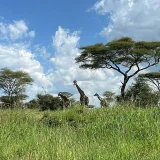
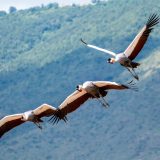
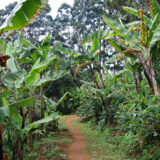
Wildlife sightings are never guaranteed, and the primary focus of the trek is the mountain’s natural environment rather than wildlife viewing.
Scenic Mountain Views
The Marangu Route provides impressive views throughout the trek. As the vegetation opens up, trekkers can see the surrounding landscape and the distinctive volcanic formations of Kilimanjaro.
The two main volcanic peaks are:
-
Kibo: The central and highest volcanic cone, where Uhuru Peak is located.
-
Mawenzi: The dramatic, jagged volcanic peak visible from the upper Marangu trail.
The contrast between the rounded summit of Kibo and the rugged profile of Mawenzi creates some of the most memorable scenery along the route.
Uhuru Peak Experience
The ultimate natural highlight is reaching Uhuru Peak at 5,895 metres.
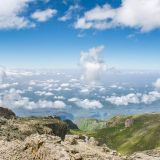
The summit provides expansive views when weather conditions are clear. The experience is particularly memorable around sunrise, when the changing light illuminates the surrounding volcanic landscape and clouds may appear far below the summit.
The summit environment is significantly colder and has much less oxygen than the lower slopes, so reaching it requires careful pacing and preparation.
Mountain Hut Experience
The Marangu Route provides a different experience from Kilimanjaro routes that rely entirely on tent camping.
Trekkers spend their nights in basic mountain huts, generally in shared dormitory-style accommodation. This allows visitors to experience the mountain environment while having a permanent shelter along the route.
The huts are simple and practical rather than luxurious. The surrounding landscapes, mountain air, and changing weather provide an authentic high-altitude trekking experience.
Photography Opportunities
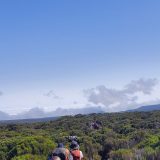
The changing landscapes make Marangu an excellent route for nature and landscape photography.
Particularly memorable subjects include:
-
Dense rainforest vegetation
-
Mountain flowers and giant heathers
-
Monkeys and forest birds
-
Mawenzi Peak
-
Kibo Peak
-
The Saddle
-
Volcanic rocks and alpine landscapes
-
Sunrise and sunset on the mountain
-
Clouds below the upper slopes
-
Uhuru Peak and the summit landscape
Trekkers should keep cameras and electronic equipment protected from rain, dust, and cold temperatures.
Climate and Changing Landscapes
One of the most fascinating aspects of the Marangu Route is the change in climate with elevation.
At the lower elevations, conditions can be warm, humid, and tropical. Higher up, temperatures become cooler and the air becomes noticeably thinner. Near the summit, temperatures can fall well below freezing, particularly at night.
This dramatic transition allows trekkers to experience several climate zones during one mountain journey.
Physical Experience
Although the focus of this program is the natural environment, the trek remains physically demanding. The combination of walking for several hours, increasing elevation, cold temperatures, and reduced oxygen makes preparation essential.
The 4-day duration is particularly demanding because acclimatization time is limited. Trekkers should maintain a slow pace and listen carefully to their guides.
The Swahili expression “pole pole,” meaning “slowly, slowly,” reflects the recommended approach to climbing Kilimanjaro.
Best Time for the Nature Experience
The mountain can be visited throughout the year, but the drier periods are generally more favorable for trekking and enjoying outdoor scenery.
The commonly preferred periods are:
-
January to March: Generally dry and relatively cold.
-
June to October: Generally dry and popular for trekking.
-
November to December: Short rains may occur.
-
April to May: Usually wetter because of the long rains.
Weather on Kilimanjaro is unpredictable, so trekkers should be prepared for changing conditions regardless of the season.
Why Choose the Marangu Route for a Nature Experience?
The Marangu Route offers a unique combination of mountain scenery, ecological diversity, wildlife, volcanic landscapes, and cultural experiences.
Its greatest attraction is the opportunity to watch the environment transform as you ascend from tropical forest to an almost vegetation-free summit landscape. In a relatively short distance, trekkers encounter some of the most dramatic ecological changes found on a single mountain.
The hut accommodation also provides a distinctive way to experience Kilimanjaro, while views of Mawenzi, Kibo, the surrounding plains, and the sunrise from the summit add to the adventure.
Book this Tour with Kilinge Adventures
Apart from this, you may read and write some reviews for us from Safari Bookings.
Also, you may read and write reviews for us from TripAdvisor
- Day 1
- Day 2
- Day 3
- Day 4
Marangu Gate – Mandara Hut
Your nature experience begins with a drive from Moshi to Marangu Gate, where you complete park registration before starting the trek.
The trail leads into the beautiful montane rainforest, where you can experience the lush vegetation, tall trees, mosses, ferns, and forest sounds. With some luck, you may see black-and-white colobus monkeys, blue monkeys, and various bird species.
The gradual ascent continues through the forest toward Mandara Hut, where you settle in for the evening and enjoy dinner surrounded by the mountain environment.
-
Distance: Approximately 8 km
-
Trekking time: 3–4 hours
-
Elevation: 1,860 m → 2,700 m
-
Natural zone: Montane rainforest
-
Overnight: Mandara Hut
Mandara Hut – Horombo Hut
After breakfast, continue upward as the rainforest gradually gives way to heath and moorland.
The vegetation becomes more open, with giant heathers, grasses, and unique high-altitude plants. The changing scenery provides an excellent opportunity to observe how nature adapts to increasing altitude.
As you approach Horombo Hut, spectacular views of Mawenzi and Kibo peaks begin to emerge. Enjoy the mountain scenery before dinner and an overnight stay.
-
Distance: Approximately 11 km
-
Trekking time: 5–7 hours
-
Elevation: 2,700 m → 3,720 m
-
Natural zone: Heath and moorland
-
Overnight: Horombo Hut
Horombo Hut – Kibo Hut
The trek continues toward the higher slopes of Kilimanjaro. The route passes through the Saddle, a broad and dramatic landscape between Mawenzi and Kibo.
The vegetation becomes increasingly sparse as you enter the alpine desert zone. The surrounding volcanic landscape, rocky terrain, and views of Kibo create a completely different atmosphere from the rainforest experienced on the first day.
Arrive at Kibo Hut, have an early dinner, and rest in preparation for the summit attempt.
-
Distance: Approximately 9–10 km
-
Trekking time: 5–7 hours
-
Elevation: 3,720 m → 4,700 m
-
Natural zone: Alpine desert
-
Overnight: Kibo Hut
Kibo Hut – Uhuru Peak – Descent
The final and most demanding day begins around midnight. The trek continues through the cold, rocky summit environment toward Gilman's Point and the crater rim.
From there, continue toward Stella Point and finally to Uhuru Peak, at 5,895 m, the highest point in Africa.
Reaching the summit around sunrise can provide spectacular views of the surrounding landscape, clouds below, and the volcanic features of Kibo. After spending some time at the summit, begin the long descent.
Depending on the specific 4-day arrangement, the descent may continue toward Horombo Hut or Marangu Gate. A conventional Marangu program normally requires an additional day for the final descent to the gate.
-
Starting elevation: 4,700 m
-
Uhuru Peak: 5,895 m
-
Summit ascent: Approximately 6–8 hours
-
Natural zone: Alpine desert and summit zone
-
Descent: Several additional hours
-
Final destination: Horombo Hut / Marangu Gate, depending on the operator